Tuesday, November 23, 2021

Six years: Kim's Nov. 23, 2015 death floods us with memories

Six years ago, I was driving up to Minneapolis with Kim in the passenger seat and talking about her upcoming hysterectomy surgery. She was anxious but looking forward to getting this one over with and moving on to remedy a growing hip problem.

It had been a tough few months for Kim. Yet, the Sept. 19 wedding of daughter Ambryn to Alexandria Kewitt at Flying Horseshoe Ranch near Cle Elum, Washington, might have been the highlight of Kim's days. After 36 years of marriage, Kim and I took a flight together for the first time, which finally hit us while on the plane to Seattle. Kim and I had both flown to conferences and visits, but never had we been together on a plane.

I think that was symbolic of our years together, often going different directions, trying to maintain our sanity while raising six kids in Winthrop. The kids were great; marriage, however, can be difficult.

Still, in the weeks leading up to her Nov. 23 surgery and that drive up to the hospital, we had settled into the reality of our years ahead, together. As I've written often over the past six years, we had once again become best of friends. Kim and I had gone through a lot together, good and bad. But we remained together, had done our best raising Ben, Ambryn, Billy, Matt, Andy and Mikell, and were amazed all had turned out so well despite the insanity.

And those four grandkids had helped keep us alive and well. Until that day.

Not truly knowing what happened to Kim that day still haunts one from time to time. Doesn't really matter, I guess. She's gone. One now simply wonders where; yet knowing she missed the birth of five more grandkids hurts, for Kim was meant to be a Grandma. She had moved on from Kimmer to Grandma Kim. And she loved it.

I've mentioned often about how Kim's hospice social worker days were her best, for she was amazing in that difficult field, "tough as a nail yet soft as a marshmellow at times," as one co-worker said. Ironically, her passion for hospice work helped guide us through her death, I believe. And now it's part of her legacy.

With grandchild number 10 on the way, I'm lucky to be there for them. And while I know I fall short too often, I don't take lightly that I must try to keep Kim's presence alive and well.

I owe that to her, to the kids, to the grandkids. Kim was a gift to all of us. Sometimes, the reality of those gifts is lost in the shuffle. And then it's gone. So each year, at the very least, I'll write about Kimberly Ann Melius, what she meant to us. 

Life moves on. Each sunrise remains beautiful. And each day, despite the craziness on too many levels, remains a gift. Peace to all who have helped guide us through this journey.


Friday, February 26, 2021

Four Hundred Souls: A Community History of African America, 1619-2019

In the fall of 1968, I entered the hospital for an appendectomy. It seemed like horrible timing for me, a couple months away from turning 12 years old, in 6th grade. I had just been asked to join the 7th-grade basketball team, which had never before happened. Old Winthrop High School had a K-6 elementary and a 7-12 high school. So it was to be quite the privilege. And I was so looking forward to it.

But under the radar for me at the time was my fellow 6th-graders' dive into the '68 presidential election, which would prove to be quite controversial. I was one of three students asked to lead a kind of debate to try and convince classmates to vote for either Richard Nixon, Minnesota's own Humbert Humphrey or a third-party candidate, Alabama Governor George Wallace.

Even at my young age, I had become quite interested in the election following a violent year, including the assasinations of Martin Luther King, Jr. and Bobby Kennedy. And I had already been intrigued about the thoughts and proposals of HHH.

But the appendix attack and hospital stay set me back, and two classmates chose Nixon and Humphrey. That left me "supporting" Wallace. I knew little about the man other than some black and white TV clips, and I was not happy with the assignment. Upon further research, I struggled to have to "defend" his candidacy during this "campaign."

I've often been asked over the years how I developed my liberal, progressive beliefs, having grown up in conservative, rural Minnesota. Was it this assignment? The turbulent days of '68? Was it my father's democratic leanings? Or my sibling's influences? I'm not certain any in particular could be pointed to as a leading influence. Maybe it was simply that I matured early, nearly six-foot by the time I hit the 7th grade.

But I was already challenging authority. A good thing, I have learned.

And part of that early, progressive thought process brought me to pressing social justice issues of the day. My older brother, Tom, was set to graduate in the spring of '69 and the Vietnam War was on our family's minds. My father, Louis, was a veteran but not one to blindly support military intervention, and I remember him and Tom talking about Vietnam; neither supported the war and Tom was not planning to accept any involvement in it. I remember talks of conscientious objections or Canada. Luckily, Tom's asthma kept him out of the service.

But it was the civil rights movement which most interested me, concerned me. I was years away from any draft number, but the horrors of the Wallace campaign and rhetoric loomed large for me. As did the spirted, and prophetic, words of MLK.

I didn't meet a Black American until college days, first at St. Cloud, then on to the University of Minnesota. But the messages were already clear to me -- the African-American journey was one of pain and suffering. And terrible injustices.

Yet, until now -- until the death of George Floyd -- I had not dived deep into that history, that horrible path through slavery, lynchings, police brutality, discriminatory public policy and more.

Why? Was it my failure to look deeper, do more? Was it a history written from a white, privileged hierarchy? Where was the real history of this country; where were these stories?

So, to kick off Black History Month, I first read The African American History: How Black Americans Have Shaped Our Country, by Henry Lewis Gates and Cornel West. Published in 2000, it had sat on my shelf for too long. To wrap up the month, I needed much more.

In Four Hundred Souls, the stories are told by 80 different Black writers, historians and activists. And they're powerful, often horrific. Each was assigned a five-year period from 1619-2019. Published just this year, it was spearheaded and edited by Ibram Kendi and Keisha Blain. It's a masterpiece and a must-read.

Trouble is, it won't be. These are troubled times in race relations.White supremacy resurfaced in ugly, very visible ways over the past several years, thanks in large part to a Trump administration which saw a path to the White House and exploited it.

Where do we go from here? We listen. We read. We tell stories. 

The stories in this book should have been told over and over and over again in our homes and schools. So, today, we have 400-plus years of stories to re-read and absorb, no matter how painful it might be for those of us who have benefitted from a misguided, predominately white male leadership model which remains too prevalent in today's political and evangelical halls.

It must change. We must do better. It won't be easy.


Monday, February 1, 2021

Black History Month 2021: Digging deep

Months come and go but as the years pile up, we need to dig deeper into Black history so the stories grow and the understanding widens.

February 1 kicks off Black History Month. And there is so much yet to discover. For me, that glaring lack of knowledge hit hard after the May 25 death of George Floyd in Minneapolis. Race. Police brutality. Criminal justice reform. Big issues which have been bubbling for decades all came together in a disturbing scene.

What can a person do to be a constructive voice in all of this? What can any of us do?


For me, it was simply time to start reading more, learning more. Time to listen more. And I also turned to a book that had been on my shelf for years, “The African American Century: How Black Americans Have Shaped Our Century,” by Henry Louis Gates, Jr., and Cornel West.


It didn’t take long for me to realize how little I knew about the Black pioneers in U.S. history. Nor did it take long to have a greater understanding of the common, agonizing, life-threatening struggles so many Blacks battled through the 20th Century and beyond. 


Gates and West gathered researchers to help pick ten key Black Americans from each decade. Both admit there are omissions: “Needless to say, there are towering figures who belong in this book yet do not appear as individual essays…”, they wrote in 2000. But those selected, along with those left out, “...are part of the great story of the African-American Century…”


They stressed, “We begin our chronicle with African Americans born into slavery and end it with those born after the assassination of Dr. (Martin Luther) King…” For them, and me, there is a startling and deeply disturbing consistency in which nearly all faced -- angry white supremacy and stereotypes. And often, aspiring Black artists, activists and thinkers found Europe a much more accepting place.

Gates and West, like any authors and educators, might now considering going back and rethinking a few selections and omissions -- entertainer and comedian Bill Cosby made the 1980s list; little-known Black American World War I pilot Eugene Bullard didn’t. Still, the 400-page history of 100 essays so greatly enriched my growing sense of individual duty to learn.


Here’s a sampling:


1900-1909 -- W.E.B. Du Bois (1868-1963), Black Public Intellectual: The authors claim “...he was the father of the civil rights era, the theorist of the movement that Dr. King led so brilliantly…” Du Bois loved work and people, "...but always I have been uplifted by the thought that what I have done well will live long and justify my life, that what I have done ill or never finished can now be handed on to others for endless days to be finished, perhaps better than I could have done."


Ida B. Wells Barnett (1862-1931), The Reformer: Her essay states, “A fearless and outspoken activist, she remains one of our most shamefully neglected crusaders...She was a cofounder of the NAACP, and still found time to work with newly migrated jobless and homeless men and women in her adopted home of Chicago…”


1910-1919 -- Mary McLeod Bethune (1875-1955), The Black Rose: Gates and West wrote she “...was as much of an institution in African-American life as Eleanor Roosevelt...was in mainstream America...If one person could embody a journey up from slavery, it was Bethune…”


George Washington Carver (1864-1943), The Peanut Man: “Young people,” Carver said, “I want to beg you always to keep your eyes open to what Mother Nature has to teach you…”


1920-29 -- Junius Austin 1887-1968), The Dancing Political Preacher: He stated, “Hold on together, for the day is coming; hold together if we are to be successful as we have been in the past. We need each other, Negroes of America.”


Bessie Coleman (1892-1926), Aviator: Gates and West wrote that “...until the Tuskegee Airmen demonstrated the Negro’s capacity to fly in combat during World War II…”, it was early pilots like Coleman who paved the way. Of her, fellow African-American aviator Lt. William J. Powell said: “ Because of Bessie Coleman, we have overcome that which was worse than racial barriers. We have overcome  within ourselves and dared to dream.”


1930-39 -- Charles Hamilton Houston (1895-1950), The Lawyer: The authors wrote, “He is one of the giants of the legal fight for racial equality.” And Houston said, “The most important thing is that no Negro tolerate any ceiling on his ambition or imagination.”


Paul Robeson (1898-1976), Citizen of the World: He was considered by the researchers as, “One of the most gifted men to rise to prominence in the twentieth century…” and, “...stands as one of the first black artists to use his eminence in the worldwide struggle against bigotry and injustice.”


1940-49 -- Charles R. Drew (1904-1950), The Blood Man: Gates and West wrote, “As a surgeon, teacher and researcher, Charles Richard Drew saved lives. In 1942, he became the director of the Red Cross’s effort to collect and store blood on a large scale.”


Lena Horne (1917-2010), Simply Lena: Horne “was the first black female star", the authors wrote. Horne despised being “as an oddity of color...How I hated those awful phrases they used to describe me! Who the hell wants to be a chocolate chanteuse?”


1950-59 -- Rosa Parks (1913-2005), Mother of Civil Rights: Parks should be known for more than just “for simply refusing to move to the back of the Montgomery public bus,” the authors noted. And Parks, who was just 42 years old when arrested, said this in her autobiography: “People always say that I didn’t give up my seat because I was tired, but that isn’t true...No, the only tired I was, was tired of giving in.”


Sara Vaughn (1924-1990), The Divine One: Gates and West wrote of Vaughn, “She was jazz’s only diva...probably the greatest voice in jazz history.” For Vaughn, her effort was simply this: “It’s singing with soul that counts.”


1960-69: Muhammed Ali (1942-2016), The Butterfly: It was Ali who might have best “captured the 1960s’ spirit of a defiant black America caught in the turmoil of its own quickened politics…”, said the authors. And he grew to be “the greatest boxer and one of the most beloved athletes of the twentieth century.”


Fannie Lou Hamer (1917-1977), Grassroots Activist: Like Angela Davis, considered a Crusader for Social Justice by Gates and West, Hamer stood out as a powerful and effective activist. While Davis’s ways were often considered radical, Hamer “became such a powerful political force in her decade that her name became known internationally,” according to the authors. Hamer wrote: “When I liberate myself, I liberate others. If you don’t speak out ain’t nobody going to speak out for you.”


Martin Luther King, Jr (1929-1968), Soul Force: “He is the prophet of the century, and the spoken voice of the civil rights movement,” Gates and West wrote. King’s struggles were America’s struggles, which continue today. “We must not allow our creative protest to degenerate into physical violence. Again and again we must rise to the majestic heights of meeting physical force with soul force,” King said.


Malcolm X (1925-1965), Black Nationalist Figure: “Like Martin Luther King, Jr., he foresaw his own untimely demise at the hands of an assassin’s bullet, but this did not keep him from telling the truth about the black condition in America and the corrosive influence of white supremacy on the American democratic ideal,” the authors wrote. Said Malcom X: “Anything I do today, I regard as urgent. No man is given but so much time to accomplish whatever is his life’s work…”


1970-79: Maya Angelou (1928-2014), The Voice: “Maya Angelou found a voice for all of us. As a poet, playwright, civil rights activist, producer, and director, she has been a pioneer in fields that were choked by oppression,” the authors wrote, adding that it was quite a life: “Angelou has worked as a dancer, a cook, a waitress, and a madam for two prostitutes, all the while raising her son and cultivating her craft.” And in her words: “Humility says there were people before me who found the path. I’m a road builder. For those who have yet to come, I seem to be finding the path and they will be the road builders. That keeps one humble. Love keeps one humble.”


Barbara Jordan (1936-1996), The Nation’s Conscience: “A lawyer, scholar, author, and presidential advisor, Jordan followed in the tradition of Justice Thurgood Marshall...as she attempted to wrest integrity from politics, and she was not deterred or diminished by the inevitable disappointments,” wrote Gates and West. Among Jordan’s words: “I am not going to sit here and be an idle spectator to the diminution, the subversion, the destruction of the Constitution.”


1980-89: Alvin Ailey (1931-1989), The Dancer: Ailey’s words and thoughts are haunting, yet largely typical of the African-American experience of the twentieth century: “I am a person who has never completely escaped from the scars to my childhood. Racism, which leaves a shadow of one’s sense of accomplishment, can make one feel like a perpetual outsider.” 


Alice Walker (1944-     ), Womanist Embracing the Color Purple: Gates and West wrote, “Alice Walker has dedicated her life to writing and to social change. Her sustained exploration of these sometimes disparate worlds has created an intersecting space for her literature, scholarship, and activism…” In Walker’s words: “I am preoccupied with the spiritual survival, the survival whole of my people. But beyond that, I am committed to exploring the oppressions, the loyalties, and the triumph of black women...For me, black women are the most fascinating creations in the world.”


1990-99: Louis Farrakhan (1933-     ), The Charmer: The authors wrote, “He inspires, he enrages, he preaches, he inflames. He is the most recent -- and most powerful -- advocate for black self-reliance in a long tradition of black nationalists.” And they added: “We admire his radical spirit, while we still look to the next generation of black leaders who will offer transformative radical solutions.”


Toni Morrison (1931-2019), Laureate: As the authors noted, she is “the first African American to receive the Nobel Prize, in 1993, for literature...She is an epic storyteller who compels us to remember those ‘unspeakable’ terrors that have shaped American and African-American culture, and she is a deeply spiritual writer...the will to be free and the forces -- both internal and external -- that circumscribe that freedom.” 


Among Morrison’s words, when accepting the Nobel Prize for literature: “We die. That may be the meaning of life. But we do have language. That may be the measure of our lives.”


(Editori's note: As a white male and amateur historian growing up in rural Minnesota, I'm not the one to look into the years 2000-2019. My only focus was to highlight the work of Henry Louis Gates, Jr., and Cornel West, and their team of researchers who looked at "The African American Century: How Black Americans Have Shaped Our Country." -- Dana Melius)


Sunday, November 15, 2020

Five years later: Kim's birthday, death make November a month of reflection

Kim (Polzin) Melius would have turned 63 this Nov. 15. It was that brief couple weeks in which she and I were the same age. My birthday comes Dec. 1. 

But just eight days after Kim's 58th birthday, just a couple months after an amazing wedding celebration of daughter Ambryn and her partner Alex at Flying Horseshoe Ranch near Cle Elum, Washington, northeast of Seattle, our world was dramatically altered. Kim died Nov. 23, 2015, at Fairview/University of Minnesota hospital, a terribly unexpected death that rocked the Melius family, our friends, and the Winthrop community. 

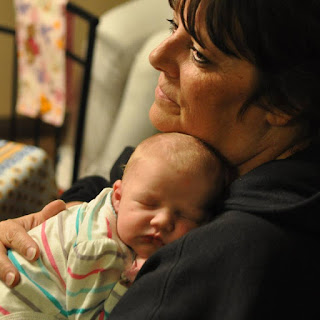
Kim with grandchildren Juniper and Myles in Sept. 2015.

For the next year, I blogged my thoughts once a month. It was tough, often repetitious, always emotional. Every time I'd write -- even today -- I would remember son Andrew's early thoughts: "I'm so afraid I'm going to forget what her voice sounded like."

That first holiday season might have been the most difficult period, other than the dozens of telephone calls I had to make the night Kim died. How do you start the conversation that your wife of 36 years, your partner through the ups and downs of 40 years together, is gone? 

"This is Dana. Kim made it through the surgery just fine. But when I got into her hospital room, she started having trouble breathing and they couldn't get oxygen too her in time. She didn't make it."

I called Mikell first. She was working at the St. Peter Herald with me at the time, and she was the first to make it to the hospital. And then it was one by one to the other five kids. Ambryn, living in Seattle, didn't answer right away so I left a voicemail and said to call immediately. Andy, who had just visited Winthrop with the kids a couple weeks prior to Kim's death, was back in Traverse City, Michigan. And to Ben, Billy and Matt.

Each call brought immeasurable pain and emotion. Still does as I look back. 

Then it was Kim's sisters, my brothers and sisters, then Kim's friends.

And finally, to Pastor Bob Miner. Bob, like everyone else I called, was in disbelief. This was supposed to be as routine as you can get they told us. Kim was in for a hysterectomy, less than a couple months removed from invasive brain surgery for a benign tumor. That was the one we worried most about, but she handled it so well. But during all that prep and testing, it was found Kim also had uterine cancer. It was in its early stages, and a hysterectomy was scheduled to be safe.

The chances of dying after a hysterectomy is less than 1 percent. Still, she made it through the surgery. Later, the autopsy provided no answers. Never knowing, always questioning, wondering what in the hell really happened doesn't leave you. Nor does the 45-minute stretch during which medical personnel tried to save her.

With the four Melius kids living in Minnesota all arriving and joining me in the hospital room to say goodbye to Kim, we called Pastor Bob and he did his best to not swear, to provide some grace in this toughest of moments. He's the best at sizing up situations and putting some words to it, no matter how tough.

Is it still tough writing about it? Sure is. But it's important for me, for the Melius clan. One doesn't want to forget Kim, and remembering even the tough times remains important. Nothing's tougher than saying a forever goodbye, particularly one this unexpected.

We are all going through this journey in different ways. But I do believe we're growing because of it. I do know that we're not taking anything for granted, that we're doing our very best to move on with deep memories of Kim and what she brought to all of us, to others.

Kim was an amazing hospice social worker. It was her gift to so many. As I've written a few times, a past co-worker of Kim's said she could be as hard as a nail or soft as a marshmallow, often at the same time. That pretty much summed up Kim. Following Kim's death, many of her co-workers through the years provided some of the finest words of remembrance. It was really the first time our kids had heard such praise of Kim's hospice work and dedication. It meant so much to them.

So, as we all move forward, November 15 through the 23rd is kind of like "Kim's week" for the Melius clan. I've moved away from the Winthrop community, the house that was home for much of our 36 years together. There are now 8 grandkids, four more than Kim was able to hold in her arms. Kim was meant to be a grandma, and each new birth is both a reminder of what she's missing as well as an emphasis to not take anything for granted.

I'm sure we're all stronger for what Kim brought to us, gave us, and continues to provide us, with memories and unique messages from time to time. After five years, I believe we are taking her with us as we move along on our respective journeys.

Peace to all. Live and love.


Daughter Ambryn and Kim getting some "RESPECT" in 2015 at the Flying Horseshoe Ranch near Cle Elum, Washington.


(This next post first appeared December 2015 in the St. Peter Herald, one month after the death of Kim (Polzin) Melius.)

Wife’s unexpected death brings community support, change

My life partner of over 40 years died Nov. 23. Kimberly Ann (Polzin) Melius had just turned 58 and died unexpectedly following complications from cancer surgery. She loved Christmas with family and will be dearly missed this year and beyond.

Life’s journey can be difficult at times, and this is certainly one of those. But nobody knew better than her of life’s circle and the reality of it all. She was a gifted hospice social worker much of her life. Still, for our six children and four grandchildren, Kim’s death hit hard.

I promised myself I’d put together my thoughts one month later, for the days move by so quickly, and life tries to return to some sense of normalcy. But it will never be the same.

Kim was more than a gifted social worker. She was tough. Death isn’t an easy path nor very often welcomed. Kim was gentle and compassionate to those individuals and families, blunt and pointed at times when needed. Her days providing hospice care were her finest, and she touched lives from St. James to Waseca, Arlington to Mankato and beyond.

On the few occasions families allowed me to tag along, I was so impressed with her passion, her ethics and her advocacy for the dying.

A past co-worker of Kim’s said she could be as hard as a nail or soft as a marshmallow, often at the same time. That pretty much summed up Kim.

The kids understood both sides, too. Family life isn’t always simple or easy. Six children and their differing personalities add to the sometimes dysfunctional nature of a large family. We weren’t perfect in our parenting skills and differed often on the right touch.

Marriage, too, can be difficult, and Kim and I struggled at times. But love evolves; it rarely adheres to the same design through the years. As Kim battled through some health issues over the past few years, she and I again became best friends. That might sound raw, but it’s so important.

The kids noticed, too. Nearly every night, Kim would place her head on my shoulder and thank me for helping her through the battles. She had undergone parathyroid surgery in May, invasive brain surgery for a benign tumor in October, and was staring at a third surgery Nov. 23 to address uterine cancer. This one was supposed to be rather routine, if surgery ever is. We’re still waiting for answers as to what went wrong.

I had become her caretaker in many ways. And I was perfectly fine in that role. It’s what you do for your life partner. I had often joked with Kim, sometimes to her sharp eyes, that 36 years of marriage wrecks one’s search for a soulmate. The joke sounds harsh, but there’s some reality to it. And as we both came to understand it and accept such reality, we relaxed and enjoyed life together.

One’s life partner, the love of it all and the great experiences and journey, prompt change. Love evolves and changes with it. Such was our relationship and marriage. Through all the ups and downs, we grew close. And I am so damn grateful for that.

Our jobs through the years often placed us on separate paths, with different friend networks. But this diverse group of friends, as well as those unique networks of our children, surfaced at Kim’s memorial service in Winthrop, our hometown. This overwhelming support, as well as touching words and thoughts on social media, was so appreciated by my family.

My presence in St. Peter over the past 18 months has also brought me into an entirely new network of friends. It was, and is, becoming my community. Kim and I had been discussing a move to the area, our first-ever discussion of leaving our hometown.

You know, when you’re caught between communities, one can feel a bit disjointed. And a sense of community is so important. So I am pleased and humbled the St. Peter community has become such a key part of my life.

That life has been forever altered. But it remains an amazing journey. And there is a great deal of good ahead. Kim would want us all to know that and move forward. And she would remind you to hug your loved ones, tight and often, and never be shy to tell them so.

And we will. Peace to you, my dear.


Sunday, December 24, 2017

Christmas 2017

It's Christmas Eve morning. It's quiet in Winthrop. I've got coffee, my thoughts and music.

Yesterday was so special, I don't really need much more. Ambryn and Alex moved into their first house in Minneapolis. Enough of the Melius clan and a new friend were able to help and we capped off the venture with pizza and cans of Coke.

Kim would have liked it. Particularly the Coke. And she would have loved the character of this new home. I'm thinking a lot of new family memories are going to take place here.

I've not written on this space for over a year. It was a calculated choice I made after the first anniversary of Kim's death. One, I needed to take a breather from those deepest of emotions. Blogging regularly, each month, about some of my most personal thoughts wasn't easy. But it was important to me to honor a promise to both myself and to Kim's memory. Two, I've been writing tons in my job and I'm still working on balance.

Today, it still feels like yesterday. And light years ago. It's that complex process which I'm guessing many who experience loss feel while coping with both memories and the challenges of moving forward. We deeply want to remember; we desperately want to move on.

This last year has been one of great importance to me and my family. Grandchild number five, Louis, joined us. It was the first grandchild Kim missed, so I'm hoping there's some spiritual presence allowing her to look in. I do know that there will be so many of these experiences she'll miss. It's truly been the most difficult thing for me, experiencing these special moments without her. It has hit the kids hard, as well. It's a guilt complex that I'm told I shouldn't have to experience, but I do. I'm working through this one.

But the fact that Sarah and Andy and Juni, living in Traverse City, Michigan, thought enough of my dad, Puddy, to bless us with yet another Louis Melius was stunning, special. It means these generations of the Melius family live on in many ways. The year brought Ambryn and Alex back to Minnesota, into that new home. Mikell joined them in a move to her own place in Minneapolis. It moved on with Matt and Krystal as homeowners in St. Peter, just as Billy and Jess and Myles continue to call this special community home. And the oldest grandkids, Bryce and Brynn, amaze with their talents. Ben and Brooke are raising two special youngsters in Mankato.

For me, my Winthrop roots remain, however distant, even while I am privileged to meet new friends and community leaders in St. Peter, Waseca, Le Sueur and Le Center. Managing four newspapers means a ton of time away from my hometown and plenty of late hours. I still struggle to find balance and while I miss the tightest bonds of community, I love to keep learning and growing.

Those who know me best understand I'm a bit complicated, always searching for answers, always wondering what's next. There's a touch of being grounded while lost in space.

What I do know is this: Most people have good in their hearts. Sometimes it takes a moment to understand it; sometimes the common good is a trifle distorted; sometimes it's lost in the madness.

But it's there. And if that thought ever escapes us, look inward. Surrounding oneself with those who are special to one's heart is all it takes for me.

Yesterday was one of those days. Earlier in the week, at the 318 Cafe in Excelsior, was another. Twin sister Neesi and I took in a Keri Noble show in that intimate setting. Another simple, special moment in time.

Life is moving on. Who knows what's next? But I do know that my six children and five grandkids will add to the Melius family memories. And those old memories will remain dear to all of us.

Merry Christmas. Spread the peace and love. Kim would like that, too.


Wednesday, November 23, 2016

One year: A lasting love letter

I made it. Kim died Nov. 23, 2015, and I vowed to write a monthly blog about this journey. Today, it ends. But will it ever?

It still seems like yesterday. Yet, the memories are fading. It's that odd roller-coaster of emotions and feelings which consume you, battle to push you on, restrict you from letting go.

The nightmares are gone. Guilt is easing a bit. But this sense of remorse, of knowing what she is missing, remains strong. Kim was meant to be a grandma.

That might be the most difficult of all. I know how she would have loved the grandkids already here, those yet to come. She would be embracing that role with vigor.

That's what dominated my thoughts standing a year ago in that hospital room. Doctors, nurses, paramedics, darn near everyone on the floor seemed to have packed into that room. Nobody really in charge, nobody with an answer. Nobody. And I watched efforts to get oxygen to her fail.

I asked them all to leave. Kim's head was tilted toward the door side of the room, where I stood. I kissed her one last time on the head saying, "I'm so sorry." She was gone so very unexpectedly at the young age of 58. I was stunned. Finally, after watching efforts for almost 45 minutes, I was alone, I was able to cry.

The many calls home, to kids, to Kim's sisters and friends, to my siblings, to Pastor Bob Miner, were the most difficult thing I've ever experienced. We were all stunned. This was supposed to be the simple surgery. She had passed in flying colors the brain tumor surgery six weeks earlier. And now my wife of 36 years, companion for 40, was gone.

Marriage is not easy. It sure wasn't for Kim and I. But as I said several times over these past 12 months, we'd become best friends once again. In that hospital room, and now, I'm so thankful for that.

But it doesn't change the fact that one regrets not being a better husband. I should have told her more often how I loved her. I should have kissed her more often. I should have held her more often. I should have argued less. There's so much more I could have done, could have been. I could have, and should have, been a better husband.
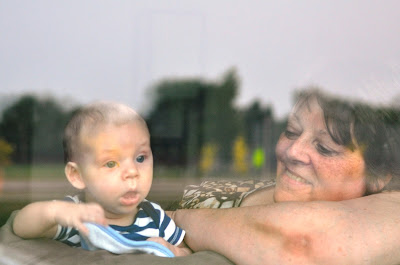
Love changes over time. The early passions often turn to the reality of parenting and how damn hard work it is. But it was an area where Kim and I had tried our best -- we wouldn't have had it any other way. Our kids were Kim's life, and mine. And they remain her legacy.

There were times in our marriage when both of us wondered where the love had gone. Kim and I often went different directions and developed separate friend networks. It pulls one away from each other. Often, there's little time for one another.

I think both of us took way too long to understand how love evolves, how it's shaped by the events, good and bad, through the years.

But we loved. Deeply.

I've turned to some close friends during this past year, asking for guidance and advice and support. And that support has been amazing. I've shared my pain, how surprising the depth of it hits the soul. Many have stated simply that the amount of pain correlates with the amount of love lost. I now smile when I say this, for tears tell that story of both pain and love.

**********
Over the past 12 months, there have been some key moments in my attempt to move forward. My move back into community journalism at St. Peter and Le Sueur meant the world to me. I was blessed by great co-workers who became special friends. I can't say enough what fellow journalists Suzy Rook, Pat Beck, Alex Kerkman, Nancy Madsen, Philip Weyhe, Dan Ring and others along the way meant. Thank you for your support, patience, understanding and friendship.

Leaving the company and them was tough, but the right thing to do, at the right time. But I will never forget them or what good journalism means to the common good.

After Kim died, I knew a departure loomed down the road. I just wasn't sure when. After a week off for the funeral, I was back at work and logged some pretty long hours. It was my sanctuary. But there were also special people I met along the way. First, I was able to rediscover a special St. Peter community. It's hard to put a finger on, but it's this island of progressive, diverse thinkers who made my years there so special and contributed mightily to my heart and soul.

When a rural Minnesota native stumbles upon such special places like River Rock Coffee, the St. Peter Food Co-op and the Arts Center of Saint Peter, it adds to the blessings.

I also found a bit of family and community in the Le Sueur-Henderson softball team. That might sound odd, but at a time when I was drifting, I saw a program which cared both about direction and purpose beyond the playing field. And I vowed to follow them through another state tournament run.

After the Giants softball team wrapped up a disheartening final two games, I watched some special people tearfully end their amazing journey. And I was honored to have covered it.

On my walk back to the car, I broke down. I had made this benchmark and knew I was closing in on the end of my work at the newspapers.

Following a three-week break in July, I targeted the November elections. And that would be it.

What's next? I'm not certain. But it's sure to include family. I have Kim's legacy to hold close.

**********
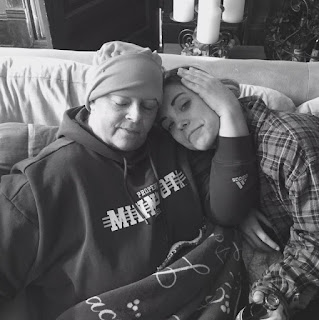
When I gaze at the picture of Mikell and Kim shortly after her brain tumor surgery, it pretty much epitomizes what we now can only hold in our thoughts. Kim was changing, going through some tough medical times, but still embracing a love of family, and hope.

I remember vividly how she approached her final surgery, a "simple" hysterectomy to deal with uterine cancer. I asked her if she was ready, and she was. I pinched her toe, of all things, and said I'd see her after the surgery.

I did. Only for minutes. Weeks later, the pathology report came back: the surgery itself was successful and had removed all Kim's cancer, which she had been fearing. It was a tough call to handle.

Not being able to say goodbye is a difficult part of this journey. Not officially knowing what happened is an equally difficult burden. Still, truly understanding what she is missing remains the most difficult.

But Kim's history of hospice/social work service, in its own way, prepared us. Her dedication to the field was respected and admired. And those professionals who worked with her and beside her during those years brought such meaningful messages to my children in the days and weeks following Kim's death. It might have been their first deep look into their mother's work. It made them, and me, proud all over again.

Kim was a great hospice social worker. It was a gift, for it's difficult work. She was soft when she needed to be, tough when it was deemed necessary. I can't begin to count the people who've come up to me since her death and told me what Kim's service meant to their families.

**********
So, this is it. This was our Kimmer. She had eyes of gold. And a spirit I could never quite figure out.

But that's OK. Love isn't supposed to be easy, with no pain. Living together is even more difficult. Shared space and community doesn't always connect well.

Yet, there hasn't been a day since Nov. 23, 2015, in which I haven't looked into those eyes and wondered a thousand different things.

I wonder what she'd be thinking about our growing family. About what I should do next. About that damn election.

I wonder what lies ahead for all of us.

But I don't wonder what role she played in my life and in the lives of our children. She was hard on all of us at times. Yet, we can still share those experiences with smiles and laughter and love.

We can also share that love over and over again. The diversity of the Melius children -- Ben, Ambryn, Bill, Matt, Andy and Mikell -- is something friends have admired about our parenting. I think they're just giving us kind praise, for there's always been this element of dysfunction in all our journeys. Maybe that's what makes it all so right.

This journey moves on without Mama Melius. Kimmer, we will continue to look into those eyes, ponder your guidance. And we will never forget your love.

All my love, Dane

P.S.: I finally watched another episode of NCIS. It contained a great message, one which would have made you smile. But it wasn't the same without you. I'll keep working on these things.

Saturday, October 15, 2016

(Nearly) 11 months: Kim's Nov. 8 vote

Kim isn't going to be able to cast a vote this election. I'm guessing she's just a little bit upset about that, among other things. I'm pretty darn sure she's shouting at any TV which might be available. And she's probably pissed there's no Facebook to click and comment.

And reload. And like or love. (She likely wouldn't have figured out all the options.)

Kim's Nov. 23 death has put our family on this yearlong journey of reflection. And for those of you who have followed this blog, your kind words and support have been truly amazing.

But this month, besides a bit early, I have to veer off a bit and give Kim a voice. She would have wanted me to do so, for she was not one who wished to remain silent.

Going back to last November, among one of Kim's last Facebook posts was her sadness over the refugee crisis in Europe and the Middle East. But it was America's response --  the lack of it, the hate and fear -- that prompted this mother of six and grandmother to scold.

It was a good scolding.

Had she survived, Kim would not be happy with the emergence of one Donald Trump and his ongoing message of hate and fear. (Some of you may want to leave at this point. Kim would likely have never removed her Trump-supporting friends from Facebook, but her messages would have been clear.)

But the latest news about Trump's narcissistic, sexist and demeaning ways with women would have been the final blow. She would have, putting in words the Trumpers can understand, been unshackled.

Any mother should be able to understand. The vulgarity, the over-the-top language, the bragging of affairs and girlfriends and agreeing his daughter was a fine "piece of ass" and eyeing a 10-year-old girl as his future girlfriend...and so on. It would have long ago tipped Kim's scale of decency.

She would have asked all of you to look into the mirror and ask yourself if that's who you would want representing this great nation. This already great nation. She would have asked you to talk with your daughters and see how they felt about Trump's ways and words. She would have asked fellow mothers about the times they were whistled at and touched and treated as objects, then asked again how your daughters have too often been objectified, groped at a bar or worse, turned upside down at a wedding dance.

She would not have listened to arguments about eight years of an Obama presidency, for she would have asked you to truly listen to Michelle Obama's amazing, powerful words and asked you to compare the contrasting messages and directions of the two campaigns.

Kim would not have tolerated the bashing of one Hillary Clinton, nor the criticism that she stayed with a wandering husband. She would have noted the difficulties women continue to face in the workforce, having to be that much better, that much more productive, that much more balanced than male counterparts.

She would have called a horse's ass a horse's ass.

And then she would have taken it one step farther and called her four sons. She would have asked them if that was typical "locker room" talk. And Kim would have heard from the boys that, no, it wasn't. And this proud mom would have known she did her best to teach her men to be better, to respect women. And they do.

That would have been Kim.

We all make mistakes. I made many more than Kim during our 36 years of marriage. But it's always been about moving forward, trying to do better, learning along the way, and then trying to do good again. It continues to be our family's journey.

Kim would sometimes roll her eyes at my stories of days gone by, of having visited with Hillary on two occasions, of having sat at the table with her in Washington, D.C. to help work on ideas and policies dear to us. (And she's probably rolling those beautiful eyes again.)

But as direct and unforgiving as Kim could be at times, she was a great assessor of the good in people. And she saw that in me, thankfully.

Say what you want about the Clintons. But that's the difference in this campaign. Moving forward with a sense of direction. Of hope, not fear. Of the potential good in all of us.

It was Kim's message as a social worker. It was Kim's message as a mother. It would continue to be Kim's message today.